Wednesday, March 8, 2017

What Unit is Your Boyfriend in?

*Disclaimer, this blog is meant to be both educational and entertaining.  The information shared here should not be a substitute for your own research.  Additionally as new information comes to light through books and other reputable sources, facts shared here are subject to revision.  Constructive feedback is welcome as long as it is appropriate and professional*

Today is International Women’s Day a day to honor and celebrate women worldwide and their contributions throughout history to shape the world we know and the society we live in.  As female re-enactors we represent the memories of many of these women who made sacrifices and dedicated their lives during times of hardship to support their country and society.  Because of this I felt it was time for me to write a post about a topic that nearly every woman in re-enacting has encountered at least once in their life.  My original draft for this post was vastly different and touched on a post-event review of FIG 2017 but after reflecting on the meaning behind today I changed my mind and wanted this post to focus on one thing and not be muddled by other information. 

Many of my readers may know me outside of just this blog but when I’m not re-enacting I have a B.S. in Industrial Engineering and I am currently a Quality & Operations Manager for a multi-million dollar sign manufacturing company.  I am extremely proud of my career and everything I have achieved professionally.  I am fortunate enough to work for a Woman-Owned Business and work alongside a Senior Management team that is primarily women but working in a corporate environment and a technical field I also am accustomed to working in a male dominated industry and working twice as hard to earn the respect of male colleagues or consistently getting overlooked at industry events because I’m a woman.  Truthfully this often isn’t any different in the re-enacting hobby.  Just like there is a stereotyped perception in my career about why would a woman want to be an engineer and yet it’s unheard of that she could be “on the same level” as male engineers the same perception exists among many male re-enactors in the hobby. 

Why would any normal woman spend thousands of dollars a year on uniforms and equipment for a hobby that is made up of 80% men?  Simply put because I want to, because I love history and I love the enjoyment I get when I go out to an event and recreate that part of history if even for a day.  It’s not any different than the reasons that any man in the hobby has for doing re-enacting and yet every event I get asked one specific question.

What unit is your boyfriend in?


This repeated question and stereotyped opinion that a woman wouldn’t ever join this hobby unless they were dating or married to a man who is a member of a specific unit has become so prevalent that myself and several of my friends have made memes, jokes, and even place bets on occasion at event on how many times I’ll get asked the question.  This is not to say it is a negative thing if you are a woman who has a significant other in the hobby.  Women don’t go up to men in the hobby when they first meet and ask them the question “what unit is your girlfriend in,” so why is it different when men meet women in the hobby?  Why is it outside of the norm for a woman to pursue this hobby on her own regardless of the truth if she has a significant other that does it as well or not?

The story of “What unit is your boyfriend in” for me began at Collings Foundation in 2016.  I was invited to participate in the event as a Luftnachrichten Helferin.  On Saturday afternoon of the event I was sitting in camp working on a few minor sewing projects when a few men from another unit came over to introduce themselves to me.  Since I was the only woman in a camp of 40+ men and a new face to New England events I wasn’t surprised they were slightly curious to meet the new person.  After basic introductions one of them asked the specific question, “So what unit is your boyfriend in?”  Initially I was taken aback that he could be so blunt and then responded “none of them.”  This wasn’t the answer they were expecting and they asked what I meant by that trying to find a better explanation.  I continued to explain to them I’m not dating anyone in any unit. At this point in the conversation they were completely confused and asked why I was here then.  My final response was because I enjoyed it; I love the history, and love attending re-enacting events where I can contribute to keeping this aspect of history alive.  The conversation hit an awkward pause because these men through the expressions on their face and body language conveyed a message of confusion, they weren’t sure how to talk to a woman like me or if they should now proceed to flirt with me because surely what I said wasn’t true and I must truly be there to find a boyfriend or try to have an engaging conversation.  There wasn’t really anything more they were able to come up with to talk to me about and it was after they departed the impact of their initial question really dawned on me and how deep rooted stereotypes are in this hobby still exist and the uphill battle each of us women face in breaking through that barrier as re-enactors. 

So many other women in the hobby I have met have encountered a similar situation at least once in their life.  Each of us will always face a battle to be taken seriously despite the fact we spend hours upon hours researching and thousands of dollars on our uniforms and equipment.  A great number of women in the hobby aren’t there to pose and look pretty for pictures.  It’s not easy dealing with this perception and some days you’ll feel incredibly rewarded but other days you might feel incredibly beat down.  And unfortunately no matter how hard you try to change peoples opinions some people won't ever change their mindsets.  

The most important thing is to never forget why you do this hobby, what it is you love about the hobby, or what aspect of the history you are passionate about.  I’ve been through a lot of rough patches in both my career and my various re-enacting time periods and time after time the thing that gets me through it is reminding myself about what gives me personal gratification and I what find rewarding.  Keeping your focus on this will help you overcome the repeated questions of “What unit is your boyfriend in?”

Understand you’re not alone either.  There are plenty of groups, units, and individuals that will respect and support you for who you are as a re-enactor.  You may not find one right off the bat but once you do find that group, unit, or friends that respect and support you, you’ll find that you will be afforded the opportunity to flourish even more than ever before.  I’ve been fortunate enough to find some pretty amazing friends over the years that support me 110% and in turn I give my all to support them as well so we all continue to succeed.  They’ve been there when I’ve been incredibly angry in frustration, been there when I am so upset I’m crying, and been there when I’ve been over the moon happy too.  I know they’ll always be there to support me no matter what.  If it wasn't for them I wouldn't be half the re-enactor I am today.  Additionally there are so many significant others of my friends who support and love them for their passion for the hobby and what they strive to achieve. 
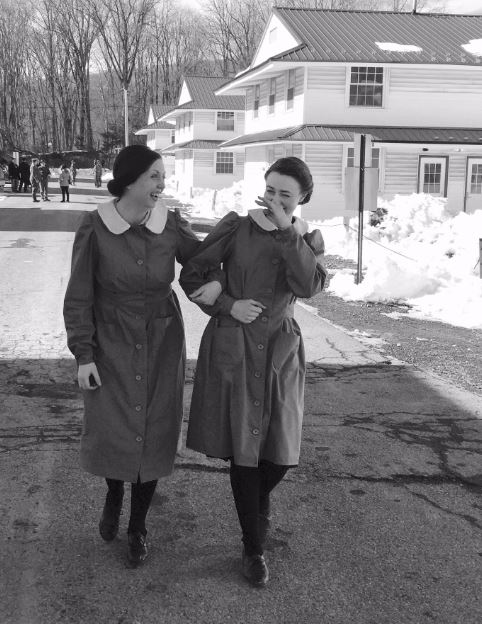
Find those people at events that'll keep you smiling and laughing always!
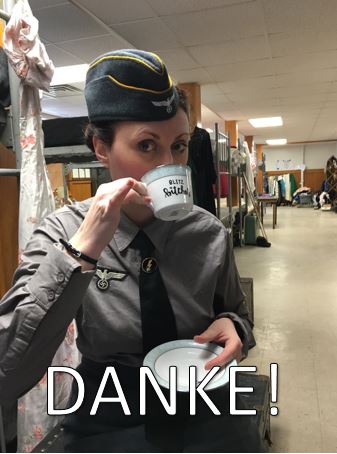
I want to wrap up this post before it gets too lengthy.  Although this post talked about a more serious topic or situation, try not to take this hobby too seriously or personally.  Remember to keep a good sense of humor about this crazy thing we call re-enacting.  It is a hobby after all.  At the end of the day we go to events as an escape from our daily lives and as a way for us to relax and enjoy ourselves from the monotony of our regular lives and jobs.  This is exactly why I often post on social media joking about the number of times at an event I get asked the proverbial question, “what unit is your boyfriend in, “ and have even created a hashtag for those stories.  Those that know me know I take my impression seriously but always know how to joke around and relax.  The hashtag and the memes are ways that I can remind myself to laugh and have fun because as I said this is just a hobby.  We all need to remember that and accept its okay to laugh at ourselves because ultimately you know who you are as a re-enactor and what your worth is.  Don't let the opinions and preconceived notions of other hold you back from going after what you want ever.   

On a final more heartfelt note, I want to express my gratitude and thanks to those that have always supported me and my crazy drive to be the best re-enactor I could be and never have passed judgement that I couldn’t achieve my goals in the hobby because I am not a man.  So specifically Jess, Sean, Kyle, Jamie, Joe, Rosey, Brian, and Brandon… you each know what you’ve done for me over the years and how much it means to me.  Thank You!

Sunday, January 15, 2017

A Uniform for All Seasons!!

*Disclaimer, this blog is meant to be both educational and entertaining.  The information shared here should not be a substitute for your own research.  Additionally as new information comes to light through books and other reputable sources, facts shared here are subject to revision.  Constructive feedback is welcome as long as it is appropriate and professional*

Happy 2017 to all my readers!!  It's been a long time since I sat down and wrote a post for all of you to read so I'll catch you all up to speed a bit.  I'm gearing up to head out in a few weeks to my second Battle of the Bulge (FIG) reenactment in Fort Indiantown Gap, PA.  This is a wonderful event put on every year by the WWII Historical Association.  The organizers put in countless hours to execute this event and make it one of the not to miss events along the East Coast.  This event deserves it's own separate post to describe it well so for now I'll leave just a few pictures below.  
Working some of the switchboards at FIG 2016
Dinners & Dirndls always make for a wonderful evening, FIG 2016
Since that last post I have spent the last several months dedicated to sewing and creating additional uniforms for my new impression.  After attending Warbirds over the Beach in Virginia Beach I decided to pursue a new impression as a Nachrichten Heflerin des Heeres.  This was a natural progression in my growth in the hobby as it allowed me to participate with a unit many of my friends were a part of.  

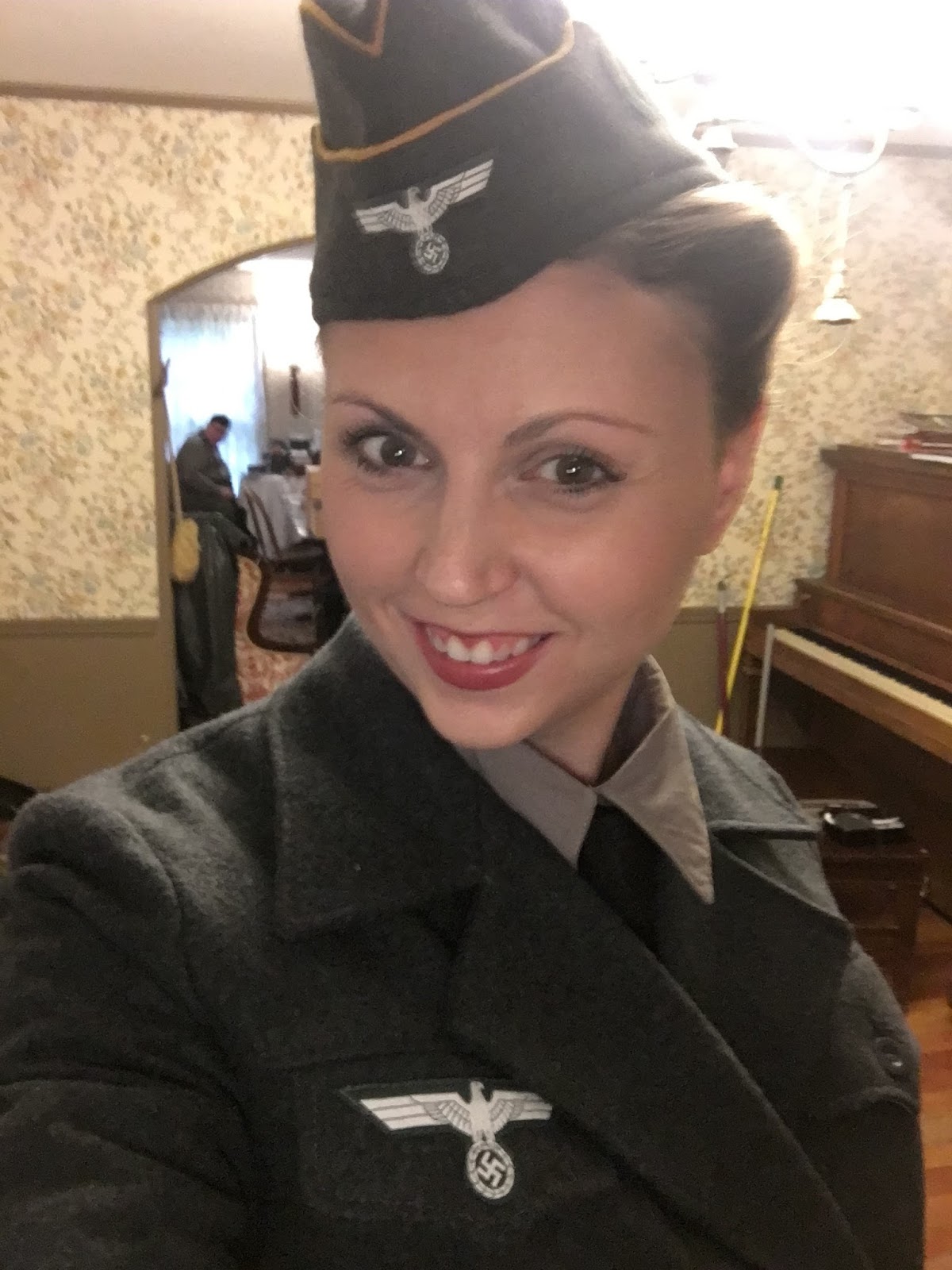
First off was the "Walking Out" uniform, this uniform is the basic uniform NHdH often were seen wearing in original photographs and consisted of the double breasted tunic, skirt, overseas cap, and service shirt.  For this uniform I decided to purchase from Schusters.  Schusters is a company located in Belarus, Russia that specializes in reproduction uniforms for both German and Russian military from WWI and WW2.  A note when dealing with Schuster is that you must have patience, there is a significant language barrier when communicating with them and their lead times are very long.  So don't order at the last minute for an event and get frustrated when they can't meet your deadline, the best plan is to order at least 4 months before you need the item.  Once getting past that, I have to say I was very impressed with the uniform I received.  The tailoring is fantastic since they make it according to your measurements and the quality of the wool is great too.  The wool is certainly not any of the cheap wool or polyester/wool blend you often see from the Asian manufacturers of reproduction uniforms.  The price was about mid-range for the female uniform market at just under $300 for the tunic, skirt, and hat.  I would recommend this uniform to anyone shopping for a wool walking out uniform for this impression.
A selfie but unfortunately the only photo I have in my Schusters Uniform, Rockford 2016
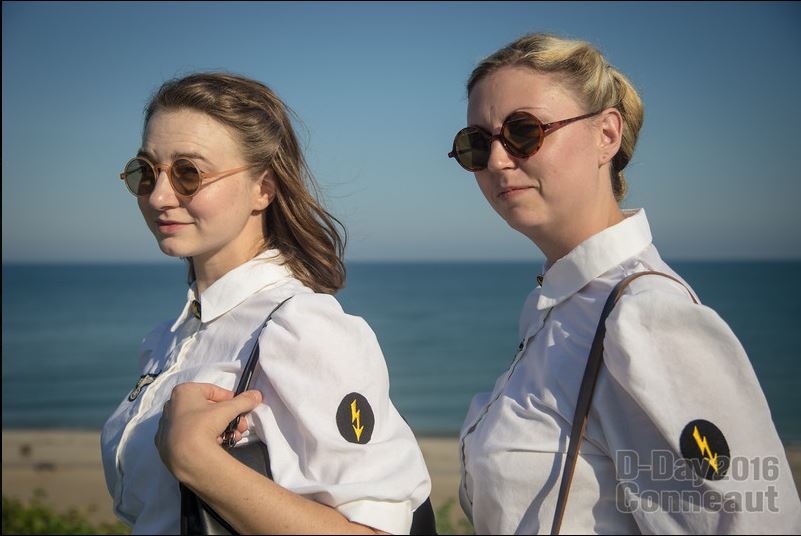
As I mentioned above Schusters has a very long lead time.  I originally ordered my uniform from them and planned it out so that it would arrive approximately 2 weeks before D-Day Ohio last August.  Unfortunately due to issues in Russian customs about a week prior to the event it was fairly clear that it wasn't going to arrive in time and coming to this realization was very disheartening.  In one of my crazy ideas I decided that if I wasn't going to have that as a new uniform to debut at the event I would come up with another uniform to debut.   Therefore one week before the event I undertook the challenge to pattern and reproduce the helferin Summer Uniform but not only was I going to make a single uniform I was going to make two, one for myself and one for my friend and fellow reenactor who also had her Schuster uniform delayed.  

The summer uniform was pretty straight forward in it's design as it consists of a white linen skirt with kickpleats and a white linen button up blouse.  The skirt I was able to reverse pattern from my Luftwaffe uniform skirt and the blouse was a mishmash of various pattern pieces I had for other blouses.  The uniform was quite well received and turned out beautifully.  In addition the gift of the summer uniform to my friend was a complete surprise and something she truly appreciated.  
Enjoying our lunch while trying to keep the white uniforms clean, D-Day Ohio 2016
Photo taken by Canteen Cowboy at D-Day Ohio 2016
The last uniform and possibly the most challenging uniform project I undertook this year was the Wehrmacht Helferinkorps M44 uniform.  This uniform was only issued after November 1944 once all the branches of the helferinkorps were organized under the umbrella of the Wehrmacht Helferinkorps.  Although the uniform style was basically standardized each branch still had small variations such as the color of wool, insignia, and other minor details.  The uniform consisted of a tunic, skirt, and/or pants.  In the book, Last Ride of the Valkyries, author Jim Poole does an excellent job translating the original tailors instructions on the construction of the uniforms.  

The same friend who I did the summer uniform was one that I decided to reproduce this uniform for along with one for myself.  Both her and I lamented the inconvenience when we are at field events that we didn't have a uniform with pants to wear which drove our desire to try and reproduce this uniform.  After hours of research on this uniform I felt prepared to tackle this project.  
Research & the start of notes on the pattern for the M44 uniform
In terms of patterning, I was able to drape a pattern using a reproduced Flak helferin M44 tunic and for the pants used a pair of civilian ski trousers to reverse engineer a pattern off of.  This process in itself took approximately a 6 weeks alone to finalize.  After countless revisions and mockups a final pattern was completed and ready to start on construction of the final uniforms.  

Before starting on the final uniforms, the correct materials had to be sourced.  The Heer M44 uniforms were made of a Feldgrau colored wool which is not an easily sourced color wool.  Both Hessen and At the Front sell this wool by the yard though.  I requested swatches from both of them and after receiving both swatches and comparing them I chose to proceed with the fabric from At the Front.  Hessen's was not a bad wool or an incorrect color, it was just a preference to go with At the Front.  Buttons were also sourced from At the Front and the insignia came from Bill's Militaria.  

Many late nights, long weekends, and blood, sweat, and tears went into these uniforms but I am very happy with how they turned out.  I would easily estimate that over 100 hours if not more of work went into this project.  The uniforms finally made their debut at IR134's annual December event, "Christmas in the Trenches," in Lugoff, SC.  Again this is a wonderful event that deserves it own separate post to do it justice.  Although I will say these uniforms were perfect for the event, as it wasn't only a field tactical event but occurred when South Carolina had unseasonably cold weather so warm wool pants were a welcomed comfort in the cold weather.  
Morning Appell at CIT 2016
The entire NHdH squad from IR134, CIT 2016
And now you know exactly what I've been up to for the last several months this year.  I think that my collection of helferin uniforms is nearly complete so now I'll have to look to the next project to expand my reenacting wardrobe.  And for those that are attend the Battle of the Bulge event in a few weeks, I invite any of you that are interested to attend my class I'll be teaching titled, "Include and Elevate," which is based off of the topics I discussed in my last post I wrote in May.  

Links of Interest:

Battle of the Bulge Event Link:
http://www.wwiiha.org/new/index.php

D-Day Conneaut (Ohio):
http://www.ddayohio.us/

Schusters:
http://schusters.ru/en

IR134 "Hoch und Deutschmeister":
www.IR134-HuD.com


Monday, May 30, 2016

Taking a walk down Easy Street

*Disclaimer, this blog is meant to be both educational and entertaining.  The information shared here should not be a substitute for your own research.  Additionally as new information comes to light through books and other reputable sources, facts shared here are subject to revision.  Constructive feedback is welcome as long as it is appropriate and professional*

I'm back everyone!  I apologize that I've taken such an extended hiatus from posting but I'm back just in time for the start of the summer re-enacting season and felt that this post would be extremely relevant to the types of events that typically occur in the summer months.  It is a post I've been tossing around in my head since I started this blog but unfortunately life outside of re-enacting got in the way and sidetracked me as well as the development of a new impression, but with the extended holiday weekend here in the USA and riding a high from a fun event last weekend it was the perfect opportunity for me to put my thoughts down into words.  This post will be a little longer than my past ones but it's some great information I really hope will help you.  
Last weekend's event, Warbird Over the Beach in VA Beach
In my experience I've found that there are two types of events in our hobby, the tactical event and the Display/Living History event.  I'm going to focus this post on the Living History event experience and how you can take your impressions to the next level at those events and connect, teach, and impact those guests from the public who decide to spend their money to attend and experience the history we represent.  

Why am I writing this topic now?  As a woman in the hobby the majority of the events we attend are Living History events, true we do, on occasion, attend tactical's but even some of the topics I'll discuss may also benefit you when you attend tactical's.  Also let's be honest without the guests attending these events, paying admission fees, providing donations, or investing in the events by other means half the events that are put on wouldn't be feasible.  A great example is D-Day Ohio which I referenced in a previous post.  This event is put on solely by donations from the public and without that we wouldn't have the opportunity to bring the history we love alive to so many members of the public each year at this event.  Because of this it is our responsibility at these events to create and maintain positive interactions with these guests so they come back year after year and so we also have the opportunity to participate in these events too year after year.  

What makes you an expert?

I'll be honest I don't consider myself an expert by any means on the topic of public interactions and engagement.  There are still many times I get incredibly nervous about talking to people I don't know and putting myself out there, but fortunately I have had the opportunity to learn from some incredible teachers over the years in my other time periods which have prepared me and taught me some great concepts that I've been able to carry over to WW2 re-enacting as well. 

In my introductory post, I mentioned I have performed at the Bristol Renaissance Faire for the last six years.  As part of our performance training we participate in the Bristol Academy of Performing Arts (BAPA), through this academy we have the opportunity to learn from locally and nationally renown educators in the areas of improv, environmental theatre, and first person historical interpretation.  Every year I continue to learn more and more through ongoing education associated with this program and apply it to all the time periods I participate in.  I won't be going into intricate detail as this post would be way too long but instead have picked 3 of the most important topics I feel will benefit you in your impressions and interactions with guests.

Conversing with a fellow actor while still staying open to include guests
Taking a walk down Easy Street

The topics I'm going to go over here are all covered in the book, "Easy Street" written by the brilliant Ann-Elizabeth Shapera.  "Easy Street" is described as a guide for players in improvised interactive environmental performance, walkaround entertainment, and first person historical interpretation.  If you truly want to take your impressions up a level in terms of connecting with the public and talking with them or even develop your impressions into more of a first person interpretation versus a third person I highly recommend picking up a copy of this book.  I'll post a link to it at the end of the blog.  One caveat I will forewarn you about, when reading the book you will have find a balance with some of the topics to not take your impressions too far into the entertainment or comic aspect and away from representing the true history accurately.  Remember I mentioned what might be applicable when you participate in tacticals? This book has chapters focused on first person interpretations which can be invaluable when you are at a tactical and trying to become a particular soldaten, nurse, or other persona for the duration of the event.  
Easy Street by Ann-Elizabeth Shapera
I also want to credit the author of this book too and all the topics I discuss in this post.  Ann-Elizabeth Shapera or A-E Shapera or Jane the Phoole as she is also commonly known has a performance career that spans thirty years including over 20 years doing first person historic interpretation.  She has taken part in many environmental/street theatre events around the world and currently travels the both within the USA and abroad sharing her techniques and teaching workshops on the topics she covers in her book.  Through her experience and knowledge she recorded it all down in her book to educate others and help them succeed.  If you ever have a chance to attend one of her workshops, do it, you will not regret it!
Jane the Phoole as portrayed by A-E Shapera, photo taken by John Karpinsky
Make It Worth It

Reflect again on why you have chosen to pursue the WW2 hobby or any re-enacting.  We all have our own reasons as to why we chose to pursue it but one that A-E discusses is the idea of "Making it worth it," if you can find a way to incorporate this you will have the most rewarding experience in the hobby and will incorporate all the other reasons you've chosen this time period as well.  

Making it worth it benefits everyone associated with the hobby; event organizers, guests, your fellow re-enactors, and most importantly yourself.  The following concepts are from Chapter 1 of Easy Street.

Make It Worth It for guests and patrons who travel for hours and spend large amounts to experience the history we represent.
Make It Worth It for your fellow re-enactors to invest their life force in building a great escape for guests and other re-enactors.
Make It Worth It for yourself to ensure you are getting the reward you want from the hobby
Make It Worth It for the event's management to ask you to continue to represent and participate in their endeavor.  
Make It Worth It for guests, new and die-hard alike to invest themselves in coming back for more and maybe even pursuing the hobby themselves.  

Aligning all of these will help you get the most reward from within the hobby itself.  

It Only Takes a Moment

Chapter 9 of Easy Street is titled "It only takes a moment."  Truthfully at events you only ever have a moment to meet a guest and make a lasting impression and let's be honest a moment is not very long at all.  During the moment the guest doesn't need to know the entire backstory on your impressions or why you do that impression or even that you've been doing the hobby for 17 years and spent countless hours researching information.  What they do need to know is what your impression is and what you are doing or how you fit in with the event.  Your uniform/clothes, body, walk, and physical attitude can do a great deal of work in this regard.  Another way to do this is to develop a standard introduction for your impression.  

Since most of us still practice third person interpretations at Living History events we can use a plethora of modern personal introductions to develop and apply at events.  If you have a background in business or customer-service this concept will come pretty naturally to you that you might think you're doing it wrong.  But in actuality it should be easy!

Never discount how a smile and a simple "Hello" greeting along with a "How is your day going?" may be all you need to capture that opportunity to expand the moment with the guest and even open it up for a more in depth interaction where you can discuss even more details of your impression and the history behind it.  Understand not everyone wants to be engaged either, they just want to walk by and observe, but for those few that do the successfully connecting with them in the moment will be incredibly rewarding.  You will most likely be pleasantly surprised at how many guest actually welcome the engagement too.  

Include and Elevate

So here's the concept I find most important we embrace as re-enactors at Living History events.  A-E Shapera and many other teachers in environmental interactions will stress this as a key pillar to master in order to be successful.  The idea of "Include and Elevate" our guests during the event and not exclude them.  Include them by bringing them into our world and elevate them by making them feel valued in their attendance at the event or expanding their knowledge of history.  There is a reason it's called living history, we aren't wax figures sitting behind velvet ropes, instead we immerse ourselves in our impressions and in turn should invite the guests to do the same.  We've all heard the question at events when we're eating, "Is that real food?"  As annoying as that can be, instead of brushing the question off take advantage of the guest's question to include and elevate them on the encounter and engage them in a positive explanation to their question.  Questions like that can really be a guests way of reaching out asking to be engaged more.  

A caveat I will put on this is that there are times at event we do have to "exclude" guests from immersing themselves because of safety constraints in certain areas of our displays.  This includes times when preparations are underway for field battles or other training exercises are going on.  In this case you can still include and elevate the guest by stepping outside the closed off area if you aren't an active participant in the exercise and explain to the guest what is going on and possibly the reason why they need to keep a safe distance in a friendly and cordial manner.  A recent experience at an event reinforced the idea of doing this even when guests need to be excluded from a certain area of an event as there is no excuse to ever be curt or rude to a guest. 
FJ Jump Tower training, an example where the public needs to be kept at a safe distance but you can then go among them to explain the exercise to still include and elevate.
The best way I can illustrate the concept of "include and elevate" is by sharing a story of one of the best interactions I've ever seen by a WW2 re-enactor done by the "Cheshire Cat" from my very first posts.  

I was sitting at camp with this friend, who at the time was doing a FJ impression, and he was in the process of shaving for the day when a family comes strolling into camp.  I look up from my sewing and greet them.  When they look over and see my friend shaving one of them actually speaks up and asks, "Are you actually shaving?"  This engagement from the guests received the "moment" I mentioned above for initial connection and welcomed the expansion of further interaction.  Now my friend could have simply replied with a "Yes" and continued on but instead he chose to include and elevate this group.  He started explaining that German soldiers were supposed to be clean shaven and the way they were able to maintain this in the field but that wasn't enough.  He then invited one of the younger boys in the group to sit down in the chair and he took out the german shaving cream he had, lathered the kid up and demonstrated how he would properly shave in the field stopping just short of actually shaving him.  As an onlooker I saw how much the family enjoyed it with their smiles, laughs, and ongoing questions and how they truly felt included in our camp setup and display we represent.  In the end when the family decided to continue on it was clearly visible that this interaction was one of the highlights of their day and my friend had exceeded their expectations by including and elevating them in their interaction.  

This brief example shows exactly how we move beyond simply showing guests our world but including them or even immersing them in it.  

Information Overload

At this point I'm sure you're completely overwhelmed with all of this information and hopefully you're not completely second guessing everything that you do at events.  I promise that if you have even one positive interaction with a guest at an event you are applying these concepts correctly and successfully.  You're not going to have success with every single interaction, no one ever does no matter how long you've been in the hobby but set the goal of one each day of an event and you will find the reward more than you can imagine.

The last thing I want to touch on is why you should consider using any of these tools at an event.  We all know we have our own reasons to go to events, whether it's to teach about history, hang out with friends, or escape from the modern world.  For those that want to just hang out with friends or escape the modern world and will adamantly say they have no interest or desire to engage the public or "include and elevate" them I have one thing to ask.  How did exactly did you get into the hobby?  Did you go to an event and meet someone who eventually welcomed you in to their unit.  Did you have a friend who invited you to join and helped you build your impression?  Was it a veteran that you connected with and they drew you in by sharing their stories and experiences?  Whatever your response I would wager that 99% of the time however you started out those people you initially met in the hobby employed one of the topics above to help you become successful.  So next time you say "I don't need to acknowledge or talk to the public" pause and think that it just takes a few seconds with that man, woman, boy, or girl that walk by to positively impact them and you never know if they might turn into the next FJ to join your unit, the next GI to join your unit, or the next civilian impression to join your group.  Pay it forward and that'll be how we sustain this hobby and ensure the history is kept alive for future generations to learn from.  

If you're interested in learning more about the topics I discussed above, please pick up a copy of "Easy Street." A-E Shapera goes into much more detail than I could ever do on a blog post.  I also must give her all the credit for inspiring this and sharing this information with people like me so I can in turn share it with you.  

http://www.amazon.com/Easy-Street-Environmental-Entertainment-Interpretation/dp/110554351X


Saturday, March 26, 2016

Who Are You?!?!

*Disclaimer, this blog is meant to be both educational and entertaining.  The information shared here should not be a substitute for your own research.  Additionally as new information comes to light through books and other reputable sources, facts shared here are subject to revision.  Constructive feedback is welcome as long as it is appropriate and professional*

The more I reflect on my experiences as a re-enactor and write this blog the more and more I realize how eerily similar I am to Alice from Alice in Wonderland.  So for this next post I'm going to travel back to Wonderland once again.  Let's be honest, there's not a lot of women in this hobby who choose to do an Axis impression more particularly a German female impression and you may at times get questioned about why you are doing your particular impression.  Whether you're a newbie or veteran you may just feel like your encounter several versions of Wonderland's Caterpillar both in fellow re-enactors and with the public. You will get asked "who are you" and you will need to be able to answer this question from a historic representation and a personal representation at events.  This was my biggest fear going into my first event but once I understood who I was personally as a re-enactor and knew how to answer that question to guests the fear turned into excitement and enjoyment at events.  


My very first Caterpillar

As I mentioned in "Take the leap and the net will appear," D-Day Ohio was my first event as a re-enactor and I was incredibly nervous going into it.  I literally felt like a new kid going into my first day at a new school and how everyone was going to perceive me.  I knew I had my White Rabbit by my side and my Cheshire Cat was going to be there too, but who were the other people I would encounter.  Well to be honest, one of those first people happened to be exactly like the Caterpillar Alice encounters in the garden.  He was talking with my White Rabbit and then paused and turned to me and asked, "Who are you exactly?"  This caught me off guard and just as Alice stumbled over explaining herself I did the same.  For as much as I knew my personal goals as a re-enactor and had done my research on who I was representing in my impression I hardly knew who I was in relation to everyone else that lived in Wonderland.  

That brings me to the first point of this post, know who you want to be among other re-enactors in your unit and the hobby as a whole.  Are you content being the significant other of another member of your unit?  Do you  consider yourself a serious re-enactor and desire to have others look at you that way too?  Do you want to carve your own path and let your reputation speak for you?  How will you answer that question when a fellow re-enactor asks you, "Who are you?"  However you choose to answer that question answer it with confidence and never be ashamed or embarrassed of your response.  

After a split second of panic and feeling my cheeks go red in embarrassment, I answered that question as confidently as I could to the Caterpillar.  I wasn't someone's significant other, I wasn't there as just some random girl who's tagging along for a fun weekend with a friend.  I was a Luftnachrichten Helferin, I was a German re-enactor, and I was there to represent women who served Germany during the war as accurately as possible and deserved to be respected as a re-enactor like others in the hobby.  At that precise moment I knew exactly who I was.  I may have surprised the Caterpillar with my response and to this day I don't remember the exact words I said to him but I like to think it was enough for him to pause and take another look at who I was going to be as a re-enactor compared to possibly other women he had met in the past.  

Now before you form a negative opinion about the Caterpillar, I want to say he has become one of my close friends within the hobby.  He has my utmost respect as a re-enactor, he's one of the most knowledgeable men I have ever met in this hobby and is extremely dedicated to representing this history as accurately as possible.  He strives to elevate everyone around him in the hobby as best he can.  He's challenged me, supported me, and overall has helped me become the best helferin re-enactor I could possibly be.  He always encourages me to continue to grow in my impression.  In my personal opinion it's all because he was the first person to challenge me and ask the question "Who are you," to force me to decide truly who I was as a re-enactor.  If it wasn't for that, who knows where I would have ended up in this hobby.  
The (in)famous Caterpillar, and I, at Rockford 2015
Who are you?

As long as there are public guests attending events you should be prepared to answer the question from them, "Who are you?"  If you're an representing an Allied civilian, you will be asked this question.  If you are representing  a CWAC, you will be asked this question.  If you are representing a French partisan, you will be asked this question.  And if you are representing a German Helferin, you will be asked this question.  

When I'm at an event I love talking to the public!  My goal at every single event is to successfully engage the guests and teach them about history in an interesting and entertaining way.  If I have even a single guest walk away from the display or camp I am participating with having learned something new I consider the event successful.  

How do I answer the question "Who are you" though when talking to the public?  First off it's important to have confidence through body language and speech to the guest.  I'm not ashamed of the impression I represent and by demonstrating to guests with my body language and intonation that I am passionate and proud about this impression draws them in and often creates a more receptive mindset to the brief history lesson I'm about to give them.  
How do I answer someone who approaches me and asks who am I?
I say to them exactly who I am and then connect it with something they might already be familiar with.  In my case my opening response will almost always be, "I represent a German Luftwaffe Helferin which was Germany's female auxiliary service for their Air Force branch of the military."  This gives them the historic term but then connects it with something they already may know about.  For 90% of the guests you engage with this will draw their interest and even open the door for you to talk further with them about the history of women in the role your are representing.  

I'm not to sugar coat it but re-enacting German is not for the faint of heart and isn't for everyone.  Our uniform insignia, although historically correct, isn't something everyone feels comfortable wearing.  To be clear no one as a German re-enactor nor does any event ever represent the partisan side of that history during the war.  I choose to do my particular German impression because these women who served Germany in their respective roles deserve to be represented in the telling of history just as much as those women who served as Allied Auxiliaries.  

Now I'm also not going to lie to you about a particular question, if you are doing a German impression you will eventually encounter one of the toughest questions to tactfully answer.  Inevitably someone will ask you, "Are you a..." in reference to the political party in power in Germay during the war, and here is your opportunity to positively connect with them and educate them about history.  The first time you get asked this question it may be tough to answer, but if you've researched your impression thoroughly you will know the historically correct and accurate answer to give.  Explain calmly and clearly that you are not what their perception might be and answer factually who your impression truly represents.  Some guests will receive that well and appreciate the clarification even invite you to share more information with them.  Unfortunately for a small fraction of guests, no matter what historic facts you attempt to explain to them it will not change their minds.  Stay calm, confident, and genial when interacting in these situations and that's the best you can do.  

How will you answer?

You may be like Alice right after she arrives in Wonderland or you may have been in Wonderland for an extended period of time.  Regardless of your experience level, how will you answer the question "Who are you?"  Have you answered this question for years and you know exactly who you are to your fellow re-enactors and are extremely comfortable explaining your impression to the public?  Maybe this is a work in progress for you?  Maybe you are self-reflecting yourself to truly know how to respond?  Either way once you know this answer be confident in your response no matter who is asking it.  

One of the things I love about this hobby is the diversity.  There are so many people who re-enact they come from all different walks of life and bring something unique and interesting to this hobby.  There is never any right or wrong answer when defining yourself within the hobby, and every re-enactor can have a different approach and style in communicating who their impression is to the public as long as it has a positive impact on the guest's event experience.  

Figuring out my response to both situations when this question was brought up molded me into who I am as a re-enactor.  If I never encountered my Caterpillar early on I honestly don't know how I would have grown into because the positive impact his question had was instrumental to take me to where I am today.  

So consider me acting as your own Caterpillar and I'm going to ask you this question.
  
Who are you??


Sunday, March 13, 2016

What (not) to Wear

*Disclaimer, this blog is meant to be both educational and entertaining.  The information shared here should not be a substitute for your own research.  Additionally as new information comes to light through books and other reputable sources, facts shared here are subject to revision.  Constructive feedback is welcome as long as it is appropriate and professional*

Several years ago there was a show on TLC that was called "What Not To Wear."  It was the classic makeover show but one thing I always loved about it was the stylists taught many of the guests how important it was to invest in quality pieces for their wardrobe and how investing in their wardrobe will ultimately impact them positively in other aspects of their life.  This concept I think carries over well to re-enacting and why I'm calling this post "What (not) to Wear."  I'm not going to sit here and write what you should or should not purchase for your uniform and where but instead hopefully I can help you understand how a well educated investment in your uniform will positively impact your experience in this hobby.  


It's been 16 months since I started re-enacting and 12 months since I purchased my first uniform.  Since then I've had countless people approach me with questions on where to buy uniforms, what are good quality ones, how accurate are various reproductions etc.  So I decided it's time I put some of this down into a post to share with everyone.  Before we get too far into this post I want to let you know this is focused on German Helferin uniforms since my level of expertise lies in this arena instead of Allied Female Military Uniforms.

The "walking out" uniform is the most common uniform worn by women at reenactment events.  This is the standard wool uniform that women were issued during the war and what they wore when they were "walking out" or out in public when they were stationed in occupied territories.  Helferin were actually not allowed to wear civilian clothing outside the borders of Germany when in service.  The walking out uniform consists of a jacket/tunic, skirt, blouse, necktie, and overseas cap but the colors and details varied by service branch.  

Research, Research, Research

This has been and will remain a common theme of my informational posts.  Do your research before you purchase anything.  Make sure you are knowledgeable on the basics of your impression's uniform requirements.  This information is relatively easy to find, most of the recommended reference books I listed in a previous post should have this information.  Although not to substitute for your own research I've listed a basic description of some of the most common impressions below.

Nachrichten Luftwaffehelferinnen:
This uniform consisted of a blue-grey wool comparable to the color wool worn by the men in the Luftwaffe branch.  The tunic was a 3 button single breasted jacket with no front breast pocket and worn with a skirt with two kick-pleats in the front.  A light blue blouse was worn under the tunic but a white blouse was allowed on special occasions or Sundays; both blouses had a black tie and Luftwaffe service pin that were worn with it.  The overseas cap was the same style as the men's cap but no cockade was worn on the hat with the insignia and had a gold-brown piping along the top flaps of the cap .  

Examples of a Reproduction LW Helferin Uniform,
Photos Courtesy of Matthew Sperzel Photography
Nachrichtenhelferinnen des Heeres:
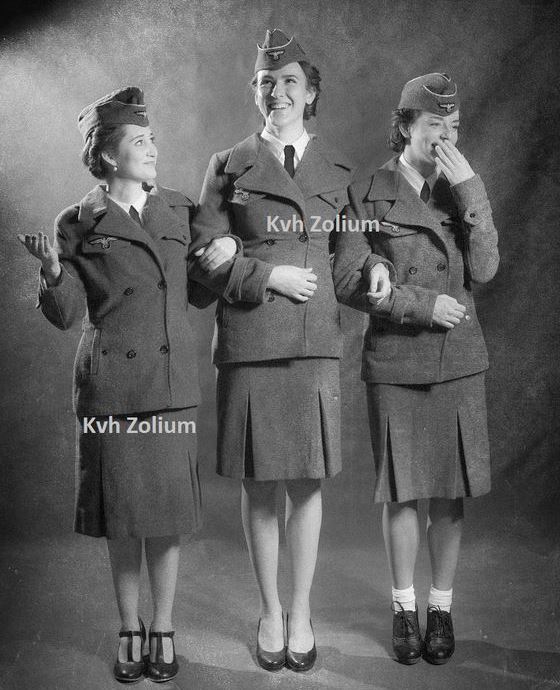
This uniform consisted of a grey wool but typically was not the feldgrau color most men's uniforms issued for the Heer branch were made of.  The tunic was double-breasted with two rows of two buttons each, it also had two front breast pockets with flaps, and at the waist were two additional pockets without a flap but with a button closure.  At the cuffs on the tunic there was buttoned tabs and on the back of the tunic a two buttoned half belt.  This tunic was worn with a skirt with two front kick-pleats and one back kick-pleat.  A gray or brownish-grey blouse with a black tie and blitz service brooch were worn under the tunic.  The overseas cap was similar to the M1938 cap worn by Heer officers, the semi-circular front had lemon-yellow piping along with the insignia and blitz patch.  
Photo Courtesy of Kvh Dolium on Pinterest
SS Helferinnen:
This uniform consisted of either a mouse-grey or Feldgrau wool.  The tunic was a 3 button single-breasted jacket with a front breast pocket worn with a skirt with two kick-pleats on the front.  A white blouse was worn under the tunic but without the black necktie worn by the Luftwaffe and Heer branches.  The overseas cap was either black.  (The SS Helferin is the branch I know the least about, if this is your chosen impression do plenty of research on the uniform for more details.)
Example of a Reproduction SS Helferin Uniform
You get what you pay for

It's no lie that with anything you purchase in today's world you get what you pay for.  If you spend $100 on a 42" TV don't expect it to be well made and come with as many fancy details as a $500 42" TV.  The same will go for your uniforms for this hobby.  If you purchase the $150 budget uniform from Ebay don't expect the quality and level of detail to be the same as the $700 uniform made in Germany. 

The quality of wool is key on uniforms, ideally you want a tightly woven wool.  The looser the weave the quicker the fabric will wear thin and eventually become threadbare in certain high friction spots on the garment and the looser the weave the lower cost per yard/meter the fabric costs.  Most of the wool used by Asian manufacturers are a looser weave which allows them to keep the cost of the garments low in price.  

The accuracy of the color can be related to the price of the uniform.  It is true that there was quite a bit of color variation that existed in the uniforms during the war due to the dye process used on the raw wool fibers but there also is certain spectrum that the uniform should strive to stay in.  Understand a low cost reproduction Luftwaffe uniform may be a bright blue instead of a blue-grey wool but as I said, you get what you pay for and make sure you do your research before purchasing.  

Details are what set high quality uniforms apart from the low cost reproductions too.  Investing in a $700 European made uniform will likely yield you a well tailored uniform with all the details to make it as accurate as possible such as the proper placement of pockets, correct color piping, and well made insignia.  A $150 reproduction may be mass produced and not well tailored, the piping may not match the correct color, and the insignia may not be the best quality.  

What's on the market?

Before I get into evaluating what's out on the market, I want to preface this by stating I am not endorsing nor discouraging purchases from any of these vendors.  If you feel a particular vendor is the one you want after doing your research then go ahead and purchase it.  This post is designed to simply help you understand more what you are looking at.  

Ebay Sellers

Recently a new Ebay listings for reproduction uniforms have entered the marketplace with reproduction sets and headwear.  They are listings include LW Helferin, NHdH, and SS Helferin uniform sets and most of them are listed for approximately $155 USD for the tunic, skirt, blouse, necktie, and cap which can appear as a steal when it comes to reproduction WW2 German uniforms.  The low price can be very attractive to re-enactors who are new to this impression and getting the whole uniform set for less than what some men's uniforms start at will make them want to jump at it.  

Remember though you get what you pay for and it looks like these uniform sets may have several inaccuracies to them.  

Let's look at the LW helferin uniform to start with.  This uniform has a front breast pocket which is incorrect for their uniform standards.  The piping on the hat also appears to be a lemon yellow instead of the gold-brown piping which was correct for LW Helferin.  The blouse should be a full button down instead of a half button down front.  The color appears to be in the correct blue-grey spectrum for the service branch and the tunic is the correct single-breasted front cut.  

The NHdH uniform has the correct double-breasted tunic and also a decent grey color.  The hat also has the right lemon yellow piping.  The skirt unfortunately does not appear to have a back kick-pleat, the blouse is also a half button-down instead of a full button-down, and the cap also seems to have an abnormal cut to the semi-circular front.  It comes standard with a white blouse which means if this uniform set is purchased the gray or brown-grey blouse would still need to be purchased. 

The SS Helferin uniform appears to be the best out of the three, unfortunately I can't willfully speak on details because I do not have the depth of knowledge to provide insight on that.  

Reproductions from India

I've heard numerous mixed reviews from a vendors from India.  Despite this I would consider these uniforms to be mid-range when it comes to price.  They typically will run close to $300 for a tunic, skirt, and hat.  The website for one of these vendors does have grainy pictures which can make it difficult to determine the quality of the garment and details associated with it.  On the website they list the uniform as a generic "helferin uniform" but it actually is the LW Helferin uniform.  The benefit is that they do make the uniform somewhat custom tailored to your measurements and can accommodate larger sizes.  

The wool they use is a looser weave wool and also tends to be a brighter blue than a true blue-grey.  The color shouldn't be ruled out as completely inaccurate due to the dye lot variations during the war.  This vendor does send complimentary fabric swatches by request so if you want to purchase from them I suggest requesting the swatch prior to purchase.  

All in all though if you choose to purchase from this vendor, see if you can talk with other re-enactors who have purchased from them and get their first hand opinion or advice.  If you connect with someone who has purchased from them in the past you'll probably get a chance to see the uniform in person to see the quality of the wool and craftsmanship.  

Feldissue

This vendor I personally and highly recommend.  I purchased my uniform from them and the quality and level of detail is impeccable.  This vendor's uniforms are definitely on the high end when it comes to price.  One of their uniforms typically is quoted at approximately $700 for a tunic, skirt, and cap.  The uniform is made based off of original wartime patterns and sewn in Germany.  Due to the fact they use original patterns they don't 100% custom tailor it to you but will take your measurements and alter the pattern ranges to fit for your size as best as possible.  

Feldissue currently produces uniforms for LW Helferin, SS Helferin, and also have a Flak-helferin uniform in process.  All three uniforms use very high quality wool with a tight weave and fairly accurate dye colors.  They provide fabric swatches upon request which I also highly recommend prior to investing in one of their uniforms.  

Uniforms from Feldissue Top R-Left:
SS Helferin, Flakhelferin, LW Helferin
Photos Courtesy of Feldissue.com

These uniforms are manufactured in Germany but shipped from England.  Due to this the pricing is in GBP so you will have to deal with exchange rates when purchasing from them.  The insignia can also be purchased from them but is shipped separately from the uniform.  

All in all if you can afford these uniforms I highly recommend you invest in them.  Earlier in this post I talked about the differences between a $100 TV and a $500 TV.  Consider Feldissue to be your "$500 TV" investment, they are much better made than the "$100 TV" because the craftsmanship and quality.  If you invest in this uniform it will last several years for you and hold up to all sorts of conditions, a $700 investment that will last you 6-10 years and only end up costing less than $150 per year.    

Make the choice which will work the best for you

I think I've rattled on long enough in this post so I'm going to wrap this up.  Of course there's countless more details I can go into about uniform specifics and if you are interested in further discussion feel free to contact me.  

One last time for this post, do your research ahead of time.  An investment in a uniform is probably going to be the largest investment you will make when building your impression.  Glossing over the research and purchasing an inaccurate uniform or poor quality uniform can make or break your impression and your enjoyment of the hobby.  

When shopping around for your impression's uniform make sure you do your research and make an educated decision for your investment, talk with the vendors ahead of your purchase, and talk with other re-enactors in the hobby and their opinions of different vendors.  Match the price point and quality with your goals for your impression and what you ultimately feel is going to be best for you.  If the economy reproduction is the best fit for you then go for it, if you decide to invest in the higher end uniform own it when you wear it, but whatever you choose to purchase the most important thing to remember is accuracy.  We represent history and actual people in our impressions and we don't want to disrespect history by being inaccurate no matter what the price point is.